Elizabeth’s Story
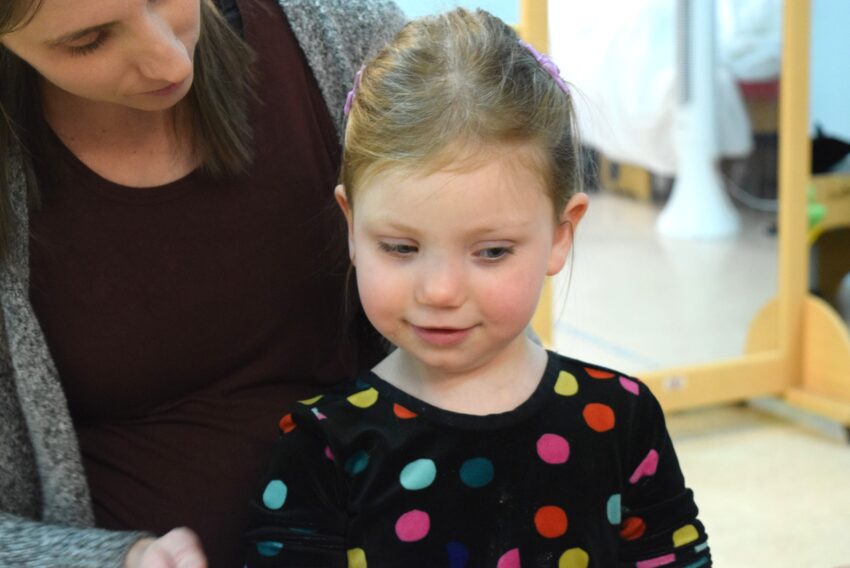
Building the Foundation with Vision Forward
Elizabeth started at Vision Forward with basic foundational skills. However, due to her visual impairment, modifications and adaptations were required for her to continue progressing and expanding her skills. The therapy team at Vision Forward assessed Elizabeth’s current level of independence in feeding, dressing, and functional play skills. They also assessed her motor skills, including sitting, transitioning from the floor to an upright position, and walking through her environment. The therapists at Vision Forward have specialized training for working with children who may be visually impaired.
Early Challenges in Sitting and Play
When she first began, Elizabeth was able to sit on the floor but had limited use of her hands for playing. She appeared to be afraid to reach out to the sides or in front of herself. She preferred to have others place the toys in her hands.
Gaining Independence in Seated Activities
Her ability to sit independently has improved so much that she can now sit on a typical kids’ chair or a small bench. The days of needing full support for seated activities are behind her. She’s also reaching for toys, and now, both her right and left hands follow auditory cues to grab what she desires.
From Fear to Confidence in Standing
When she first started in September 2024, Elizabeth relied on adults to hold her in place while standing, as she was afraid of falling. Now, as of February 2025, Elizabeth requires less support to stand and has combined the skill of reaching out to find her toys.
Walking Toward Independence
Her ability to walk has improved greatly. When she first began receiving therapy in September 2024, she was moving herself in a gait trainer only when her favorite song was playing. By February, she was walking into the clinic while holding onto her parent’s hand. She has also begun walking by herself using a reverse walker. She is demonstrating increased endurance and is even starting to turn her walker toward a favorite sound.
And the best part? She now walks into the classroom hand-in-hand with mom, dad, or her nanny, showing an incredible level of trust and confidence.
Progress at Mealtime
When it comes to eating, she has also made remarkable progress. When she first started, she preferred to eat only with her fingers. Now, Elizabeth is using an adapted spoon to scoop her food and is able to bring the spoon up to her mouth with guided physical assistance, then return it to her bowl.
A Team Effort Behind Every Milestone
Parents and caregivers have noticed the remarkable progress she’s made in every area of her development, from motor skills to social interactions. Her journey has been nothing short of inspiring. This progress was possible thanks to a team that included her family, caregivers, and therapists, all of whom adapted and made accommodations for her vision loss.
Looking Ahead with Hope
Her resilience and the support of her family have led to an extraordinary transformation, and the future is bright for Elizabeth, who continues to achieve new milestones every day.